The Ultrasonic Cleaner That Shakes Dirt Loose
Cavitation reaches places brushes miss — used carefully it saves hours; used blindly it ruins finishes.
Specification
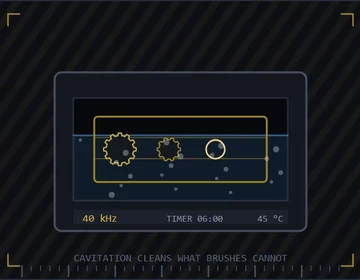
| Tank capacity | 0.6 – 3 litres (bench units) |
|---|---|
| Frequency | 25 – 45 kHz |
| Power | 35 – 120 W |
| Timer | 0 – 30 minutes |
| Heating | Up to 65 °C on most units |
| Cycle length | 3 – 10 minutes typical |
| Basket | Stainless mesh, required |
| Solvent | Dedicated watch cleaning fluid or rinse |
Overview
Ultrasonic cleaners use high-frequency vibration in a bath to scrub parts. Baskets keep assemblies organised while solvent does the chemical work. Time, temperature and solution chemistry decide success.
Not every part belongs in the tank. Soft dials, certain coatings and fragile shells can suffer. Know what you are cleaning before you press start.
Rinse and dry thoroughly. Dirty solvent only redistributes grime. Fresh baths beat heroic cycle times.
What matters about it
- Chemistry and time matter as much as power rating
- Baskets preserve order through the wash
- Some parts are tank-forbidden
- Rinsing completes cleaning
- Maintenance of the transducer bath prevents weak cycles
Practical notes
- Do not overload baskets; crowding shadows parts from cavitation.
- Change solution when it looks tired — colour is a clue.
- Dry completely before oiling.
- Keep lids closed to limit vapour.
More in Lubricants & Cleaning
The Watch Oil That Belongs in Drops, Not Floods
Low-viscosity oils for jewels and pivots — quantity is the skill, chemistry is only half the story.
The Grease That Quietens Keyless Works
Thicker lubricants for stems, clicks and high-load contacts — not a substitute for oil in jewel holes.
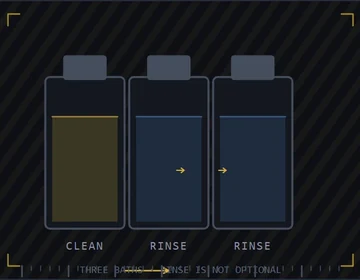
The Cleaning Solution That Actually Removes Old Oil
Solvent blends dissolve sludge from plates and wheels — rinse chains matter as much as the first bath.
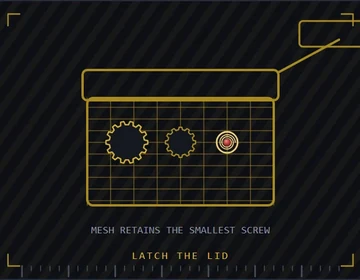
The Cleaning Basket That Keeps Parts in Order
Compartments survive the ultrasonic cycle so reassembly order does not become a puzzle on the towel.