The Hand-Wound Movement Built for Deliberate Power
Crown, ratchet and click turn your fingers into stored torque — simple, transparent and honest about when it needs winding.
Specification
| Typical jewels | 17 – 23 |
|---|---|
| Beat rate | 18,000 / 21,600 / 28,800 vph |
| Power reserve | 36 – 192 hours (multi-barrel) |
| Diameter | 23.3 – 43 mm (pocket) |
| Height | 2.9 – 6.2 mm |
| Winding | Crown with ratchet wheel and click |
| Typical lift angle | 38° – 50° |
| Hand setting | Cannon pinion with friction fit |
Overview
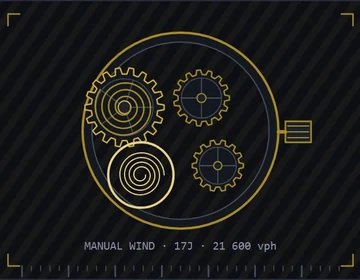
A manual wind movement has no rotor. You supply energy through the crown, which drives the ratchet wheel and winds the mainspring through the barrel arbor. The click keeps the spring from unwinding back into your hand.
Because you wind it yourself, torque starts high after winding and falls as the day goes on. That is normal. What is not normal is grinding in the keyless works, a click that skips, or a crown that turns without adding reserve.
Manual calibers are excellent teaching pieces: fewer modules, clearer power path, and every fault is visible once you know the winding train.
What matters about it
- You are the winding motor — reserve depends on habit
- Click and ratchet must hold under full spring pressure
- Keyless works fail more often than the going train in hard use
- Stem height and clutch engagement decide setting feel
- Fewer jewels than many automatics does not mean lower quality
Practical notes
- Wind smoothly to the stop; forcing past the bridle risks damage on designs without one.
- Check stem lubrication when the crown feels dry or sticky.
- Inspect the click spring whenever the watch ‘creeps’ backward while winding.
- After service, confirm both winding and setting positions before casing.
More in Movements & Calibers
The Self-Winding Movement That Keeps Itself Alive
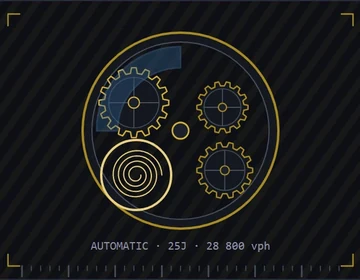
A rotor turns everyday wrist motion into mainspring tension — and that is why a daily wearer rarely needs the crown.
The Tiny Wheel That Sets the Watch’s Pace
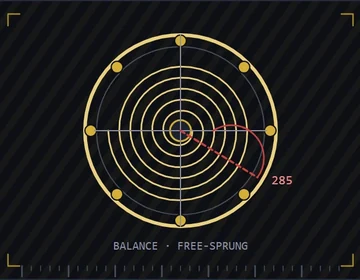
Mass, hairspring and timing screws decide the rate — get this oscillator wrong and every other adjustment is theatre.
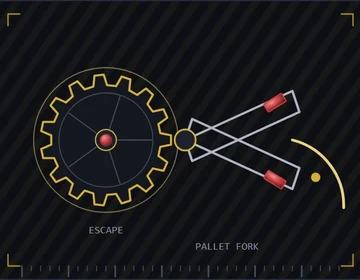
The Escapement That Meters Every Tick
Escape wheel, pallet fork and impulse faces turn continuous torque into counted beats — this is where energy becomes time.
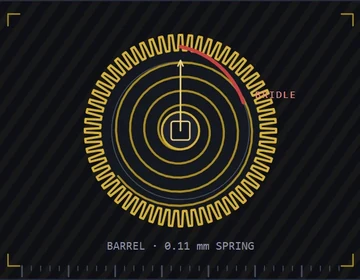
The Mainspring Barrel That Holds the Watch’s Fuel
A coiled spring inside a toothed drum feeds the whole train — service this carefully or nothing downstream will behave.