The Self-Winding Movement That Keeps Itself Alive
A rotor turns everyday wrist motion into mainspring tension — and that is why a daily wearer rarely needs the crown.
Specification
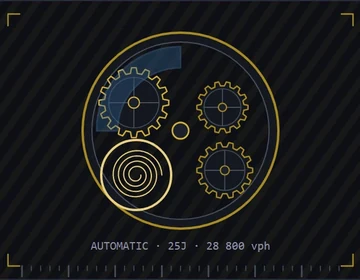
| Typical jewels | 21 – 31 |
|---|---|
| Beat rate | 18,000 / 21,600 / 28,800 / 36,000 vph |
| Power reserve | 38 – 72 hours |
| Diameter | 20.8 – 32 mm |
| Height | 3.4 – 7.2 mm (with modules) |
| Rotor type | Central, micro-rotor, or peripheral |
| Winding | Unidirectional or bidirectional |
| Typical lift angle | 38° – 52° |
Overview
An automatic movement is a mechanical watch with an extra job: wind itself while you move. A weighted rotor swings above the bridges, and a small gear train feeds that swing into the barrel arbor. Wear the watch and the spring fills; leave it in a drawer and it eventually stops.
What separates a good automatic from a frustrating one is how it winds. Bidirectional systems harvest both swings of the rotor. A slipping bridle inside the barrel lets the spring give way at full wind so continuous wear cannot snap it. Keep those two ideas in mind and most service questions start to make sense.
On the bench, treat the winding module as its own mechanism. A silent rotor that refuses to wind is usually a reversing wheel problem, not a dead rotor. Measure amplitude in more than one position before you decide the movement is healthy.
What matters about it
- Rotor motion is the only daily winding source
- Slipping bridle prevents overwinding damage
- Torque stays nearer full wind than a hand-wound watch
- Jewel count often rises with the winding module
- Complications usually add height before diameter
Practical notes
- Let power down through the crown or click before opening the barrel.
- Check rotor endshake and case-back clearance after every service.
- A free-spinning rotor with no wind almost always points to reversing wheels.
- Test dial-up, dial-down and at least one pendant position on the timegrapher.
More in Movements & Calibers
The Tiny Wheel That Sets the Watch’s Pace
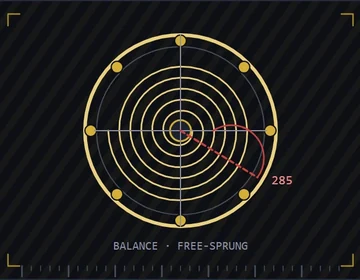
Mass, hairspring and timing screws decide the rate — get this oscillator wrong and every other adjustment is theatre.
The Escapement That Meters Every Tick
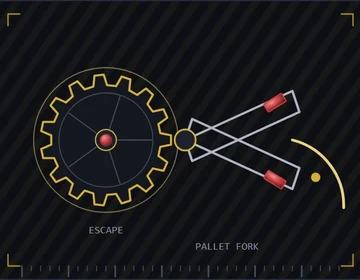
Escape wheel, pallet fork and impulse faces turn continuous torque into counted beats — this is where energy becomes time.
The Hand-Wound Movement Built for Deliberate Power
Crown, ratchet and click turn your fingers into stored torque — simple, transparent and honest about when it needs winding.
The Mainspring Barrel That Holds the Watch’s Fuel
A coiled spring inside a toothed drum feeds the whole train — service this carefully or nothing downstream will behave.