
The Mainspring Barrel That Holds the Watch’s Fuel
A coiled spring inside a toothed drum feeds the whole train — service this carefully or nothing downstream will behave.
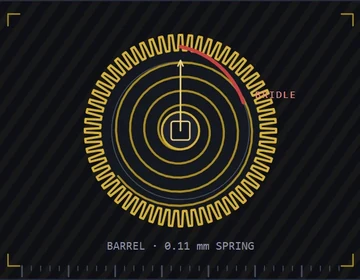
Specification
| Barrel diameter | 7 – 12 mm (wristwatch) |
|---|---|
| Spring length | 300 – 450 mm |
| Spring thickness | 0.08 – 0.13 mm |
| Spring height | 1.0 – 2.2 mm |
| Turns available | 5 – 8 |
| Torque variation | Roughly 2:1 across the reserve |
| Bridle type | Slipping bridle (automatic) or hooked |
| Lubrication | Grease on the wall and spring |
Overview
The barrel is the power plant: a mainspring coiled inside a drum whose teeth drive the center wheel. Wind the arbor and the spring stores energy; the barrel turns slowly as that energy leaves through the train.
Hooking, set, and bridle condition decide whether power is smooth or lumpy. A set spring that has taken a permanent curve will not deliver a full reserve even when it looks ‘wound’. Grease belongs in the right places and nowhere else.
Opening a barrel under tension is how people meet flying arbors. Learn the let-down routine until it is boring.
What matters about it
- Spring condition matters more than spring brand mythology
- Barrel teeth wear shows up as noisy running and lost amplitude
- Arbor hooks must catch cleanly every wind
- Slipping bridles are normal on automatics — do not ‘fix’ them tight
- Correct lubricant quantity beats correct lubricant marketing
Practical notes
- Replace a set or scored spring instead of stretching it back to life.
- Clean old grease completely before applying fresh barrel grease.
- Check arbor play; excess endshake wastes power.
- After fitting, wind fully and confirm the bridle slips rather than binds.
More in Movements & Calibers
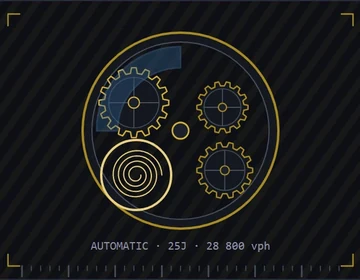
The Self-Winding Movement That Keeps Itself Alive
A rotor turns everyday wrist motion into mainspring tension — and that is why a daily wearer rarely needs the crown.
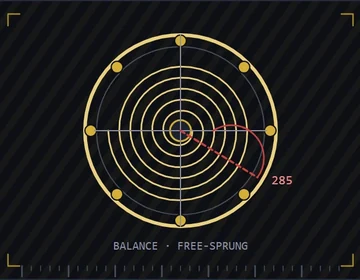
The Tiny Wheel That Sets the Watch’s Pace
Mass, hairspring and timing screws decide the rate — get this oscillator wrong and every other adjustment is theatre.
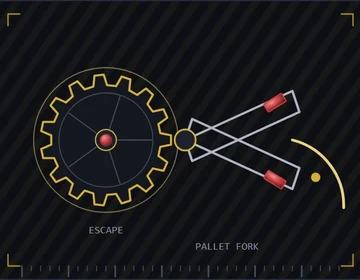
The Escapement That Meters Every Tick
Escape wheel, pallet fork and impulse faces turn continuous torque into counted beats — this is where energy becomes time.
The Hand-Wound Movement Built for Deliberate Power
Crown, ratchet and click turn your fingers into stored torque — simple, transparent and honest about when it needs winding.