The Loupe You Should Buy Before Fancy Gadgets
Hands-free magnification turns guesswork into inspection — start at 2.5× or 4× and only climb when the surface demands it.
Specification
| Magnification | 2.5× · 3× · 4× · 6× · 10× |
|---|---|
| Working distance | 100 mm at 2.5× · 25 mm at 10× |
| Lens type | Singlet · achromatic doublet · triplet |
| Lens diameter | 18 – 25 mm |
| Field of view | Inversely proportional to power |
| Mount | Eye socket, hands-free |
| Coating | Anti-reflective on better lenses |
| Typical use | 2.5× assembly · 4× service · 6×+ inspection |
Overview
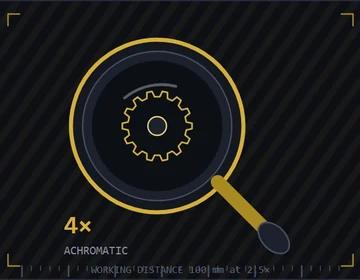
A watchmaker’s loupe sits in the eye socket so both hands stay free. Powers from about 2.5× to 10× cover assembly, service and fine inspection. The number on the barrel is a trade: more power means less working distance and a shallower field.
Most real work happens at lower powers. High magnification is for pivots, jewel faces and hairspring coils — not for chasing a screw around the plate. Optical quality decides whether you finish the session clear-headed or with a headache.
Pair any loupe with decent light. Magnification without illumination only enlarges shadows.
What matters about it
- Hands-free use is the whole point
- Choose power for the task, not for the brochure
- Achromatic lenses reduce eyestrain
- Working distance collapses as power rises
- Cheap distortion makes you misjudge depth
Practical notes
- Begin at 2.5× or 4×; step up only for surface inspection.
- Hold with the socket muscles, not your fingers.
- Use a daylight-balanced bench lamp every session.
- Clean lenses with a proper cloth — scratches are permanent fog.
More in Hand Tools & Tweezers
The Dumont Tweezers Every Bench Eventually Owns
Tip number, steel and alignment decide whether you place a screw or launch it — these are hands, not accessories.
The Screwdriver Set That Separates Screws from Ruined Slots
Blade width, tip dressing and vertical pressure decide whether a screw turns — or becomes scrap brass.
The Case Opener That Leaves Bezels Unscarred
Snap backs, screw backs and bayonets each need a different bite — the right opener saves cases you cannot replace.
The Pin Punch Set for Spring Bars and Stubborn Pins
Sized punches move pins with control — the alternative is bent lugs and launched spring bars across the room.