The Dumont Tweezers Every Bench Eventually Owns
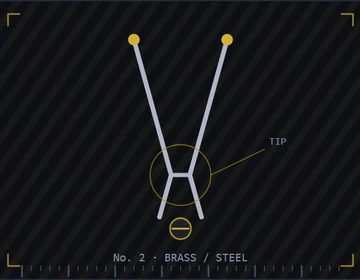
Tip number, steel and alignment decide whether you place a screw or launch it — these are hands, not accessories.
Specification
| Common models | No. 1 · No. 2 · No. 3 · No. 5 · No. 7 |
|---|---|
| Tip shapes | Fine point · round · flat · curved |
| Materials | Steel · brass · anti-magnetic alloy |
| Length | 110 – 130 mm |
| Anti-magnetic | Available on most models |
| Finish | Satin, polished, or coated |
| Tip hardness | Hardened and tempered |
| Typical grip | 2 – 5 N at the tip |
Overview
Horological tweezers are numbered by tip shape. Fine tips handle hairsprings and jewels; broader tips move screws and springs. Dumont-style patterns became a shared language so a ‘number 3’ means something specific on any serious bench.
Cheap tweezers flex, magnetise and refuse to meet at the tip. That sounds minor until you try to hold a screw over an open movement. Buy once for the tips you actually use, then protect those tips like cutting edges.
Anti-magnetic alloys matter near hairsprings. Carbon steel that picks up magnetism will fight you on every balance job.
What matters about it
- Tip geometry is the tool — handles are just delivery
- Alignment at the point prevents launched screws
- Anti-magnetic material protects oscillator work
- Separate pairs for dirty jobs and fine hairspring work
- Resharpening is a skill; dull tips become dangerous tips
Practical notes
- Store tips in sleeves; one drop on concrete can ruin a pair.
- Demagnetise steel tweezers that start grabbing springs.
- Keep a sacrificial pair for adhesives and cleaning solvents.
- Test tip meet under a loupe before hairspring work.
More in Hand Tools & Tweezers
The Screwdriver Set That Separates Screws from Ruined Slots
Blade width, tip dressing and vertical pressure decide whether a screw turns — or becomes scrap brass.
The Loupe You Should Buy Before Fancy Gadgets
Hands-free magnification turns guesswork into inspection — start at 2.5× or 4× and only climb when the surface demands it.
The Case Opener That Leaves Bezels Unscarred
Snap backs, screw backs and bayonets each need a different bite — the right opener saves cases you cannot replace.
The Pin Punch Set for Spring Bars and Stubborn Pins
Sized punches move pins with control — the alternative is bent lugs and launched spring bars across the room.