
The Demagnetizer That Frees Sticky Hairsprings
Residual magnetism slows or stops mechanical watches — a quick demagnetising pass is cheap insurance after service.
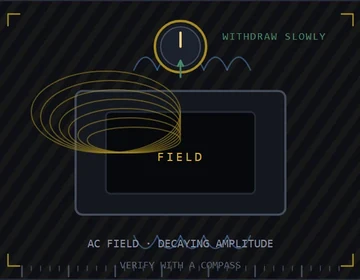
Specification
| Types | AC coil · tunnel · probe |
|---|---|
| Field strength | Several hundred gauss at the aperture |
| Cycle | 3 – 10 seconds per pass |
| Power | Mains or battery |
| Duty cycle | Intermittent — coils heat |
| Verification | Compass or magnetometer |
| Effective on | Steel parts, hairsprings, complete movements |
| Ineffective on | Persistent hard magnetic alloys in some cases |
Overview
Magnetic fields from speakers, clasps and tools can magnetise steel parts in a movement. Hairsprings cling, rates wander and amplitude falls. A demagnetizer sweeps the field down so parts can behave again.
Technique is simple and easy to rush. Follow the tool’s distance and motion instructions. Too close with the wrong unit can do more harm than good on sensitive parts.
Prevent as well as cure: keep speakers and magnetic trays away from open balances.
What matters about it
- Magnetism mimics other timing faults
- Hairsprings show magnetism dramatically
- Tools themselves can magnetise between jobs
- Demagnetise after suspicious rate behaviour
- Prevention saves regulation time
Practical notes
- Check tweezers and drivers if they start picking up screws.
- Demagnetise before fine regulation when in doubt.
- Keep strong magnets off the bench near open movements.
- Retest on the timegrapher after demagnetising.
More in Testing & Regulation
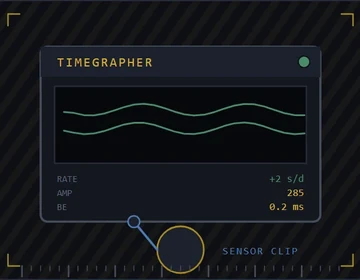
The Timegrapher That Turns Tick Sounds into Numbers
Rate, amplitude and beat error on a screen — use it to guide judgement, not to replace understanding.
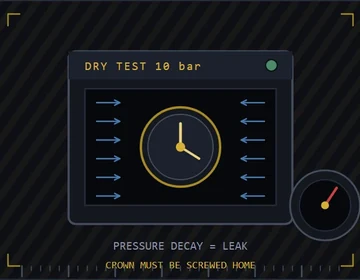
The Water-Resistance Test Before You Promise a Seal
Pressure or vacuum checks catch leaks on the bench — marketing depths mean nothing without a test.
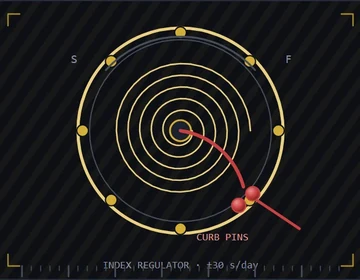
The Regulating Tool for Honest Rate Tweaks
Move the regulator index with control — bending a hairspring to ‘fix’ rate is how watches get worse.
The Case Press That Closes Snaps Without Drama
Even pressure seats crystals and snap backs — hammers leave oval cases and cracked sapphire.