
The Hands Set That Must Clear, Pipe and Point True
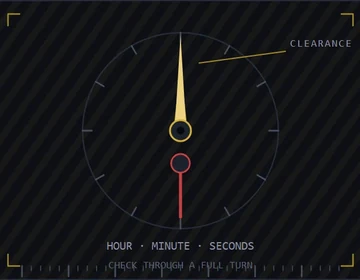
Hour, minute and seconds hands need height, parallel and pipe fit — interference here looks like a dying movement.
Specification
| Types | Hour · minute · seconds · subdial |
|---|---|
| Profiles | Dauphine · sword · baton · skeleton · leaf |
| Materials | Steel · brass · blued steel · gold-plated |
| Fit | Friction on pipe or post |
| Typical length | Hour 8 – 14 mm · minute 12 – 20 mm |
| Luminous | Painted or applied on many designs |
| Clearance | Must clear dial, indices, crystal and each other |
| Installation | Hand press or hand-fitting tool |
Overview
Hands are the output display of everything you just serviced. Pipe fit must be firm without crushing. Heights must clear each other and the crystal. A beautiful amplitude means nothing if hands kiss.
Press tools with the correct punches. Side loads bend pipes. Marking the dial while pressing is a classic rushed mistake.
Align at 12 with care. Reindexing after casing wastes time you already spent regulating.
What matters about it
- Clearance under crystal and between hands is mandatory
- Pipe fit should be secure, not brutal
- Parallel hands look intentional; tilted hands look amateur
- Seconds hands are easy to launch — control them
- Material softness varies; brass pipes crush sooner
Practical notes
- Dry-fit heights before final press when clearances are tight.
- Support the movement from below when pressing.
- Clean oils off hands so dials stay unmarked.
- Check sweep clearance through a full rotation.
More in Cases, Dials & Hands
The Stainless Case That Protects the Real Watch
Lugs, seals and seating surfaces decide water resistance and longevity — the movement only thrives if the shell does.
The Sapphire Crystal That Laughs at Keys — Not Hammers
Hard, clear and unforgiving to install wrong — sapphire resists scratches while demanding proper presses and gaskets.
The Dial You Protect Like a Finished Print
Indexes, printing and surface finish are unforgiving — one touch can turn a service into a refinishing project.
The Crown That Winds, Sets and Seals
Outside it is a knob; inside it is stem clutch, gasket and tube — wear here feels like a tired movement.